
Why Great Leaders Make Different Decisions When the Stakes Rise
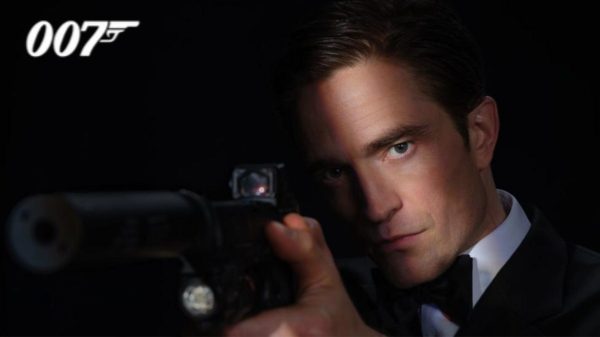
Last week, Robert Pattinson was announced as the next James Bond.
A notable choice, given that Bond has often been the role that transformed a relatively lesser-known actor into a global star. Pattinson, of course, is already an internationally recognised name.
But what caught my attention wasn’t so much the casting.
It was Jeff Bezos revealing that he had been heavily involved in the decision.
The new Bond film is being directed by Denis Villeneuve, one of the most respected filmmakers working today.
You might imagine that someone of his standing would have considerable influence over the choice of lead actor, and no doubt he did. Yet Bezos, Amazon’s founder and executive chairman, was personally involved in reviewing the screen tests of the five finalists.
He even admitted that Pattinson’s existing fame had initially counted against him, until his performance convinced the team otherwise.
I found that fascinating. Not because there was anything necessarily unusual or wrong about his involvement, but because of what it might tell us about decisions when the stakes become so significant.
Amazon acquired MGM for approximately $8.5 billion in 2022 and, through a subsequent agreement with Barbara Broccoli and Michael G.
Wilson in 2025, gained creative control of the Bond franchise.
For more than six decades, the Broccoli family had guided one of cinema’s most valuable properties.
Now, responsibility for its future had changed hands.
We have no reason to believe the Broccolis would have chosen differently, or that Amazon’s decision was driven by anything other than its belief in Pattinson’s suitability.
But it made me wonder about something that extends well beyond Hollywood.
Does the way we make decisions change when we become responsible for something that someone else has already built?
Two candidates, one decision
Imagine an entrepreneur who started a business fifteen years ago.
The early years were difficult.
Cash was tight, customers had to be persuaded to trust an unfamiliar name, and every important appointment carried considerable weight.
The founder knew the business intimately, partly because there was very little they hadn’t personally done.
Over time, the company developed a reputation, attracted talented people and expanded into new markets.
Eventually, it became successful enough to interest a larger business, and the founder decided to sell, remaining involved for a period to help with the transition.
A few months later, the new owners needed to appoint a CEO.
Two candidates made the final shortlist.
The first had an impressive CV, with senior positions at respected international companies, experience managing large teams and budgets, excellent references and a proven record of delivering results.
An expensive appointment, certainly, but someone who had demonstrated an ability to lead substantial organisations.
The second came from a different background. Most of their experience had been in smaller businesses.
They hadn’t managed the same budgets or worked for organisations whose names immediately impressed a board.
Yet during the interviews, this candidate demonstrated an unusually good understanding of the company’s customers.
They asked questions nobody else had asked and recognised opportunities the business hadn’t fully explored.
Their ideas were thoughtful, although some remained untested.
They would cost considerably less, but there was also less evidence of how they might perform at this level.
The founder was intrigued. This candidate reminded them of people who had helped build the business in its early years, people who didn’t necessarily have the credentials but understood what needed to be done.
The new owners could see the potential too, but they had other questions.
Could this person manage the next stage of growth?
Would they cope with the complexity of a larger organisation?
Was their experience sufficient for what lay ahead?
All perfectly reasonable questions.
Now imagine asking the founder and the new owners to make the appointment independently.
Would they choose the same person?
And if they didn’t, would either necessarily be wrong?
The candidates hadn’t changed.
Their experience, potential and limitations remained exactly the same.
But the people making the decision had arrived at that moment through very different journeys.
When someone sees something others don’t
I remember a particularly interesting appointment at Gucci in 2015.
Marco Bizzarri had just become CEO of the Italian fashion house, part of the Kering luxury group.
Gucci was an established global brand, but its performance had slowed and a new creative direction was needed.
One of Marco’s first major decisions was to appoint Alessandro Michele as creative director.
Michele had worked within Gucci for more than a decade, holding increasingly senior creative responsibilities.
He knew the business exceptionally well, but he wasn’t an internationally celebrated designer with a string of successful collections under his own name.
He was hardly the obvious public choice to lead one of the world’s most recognisable luxury brands.
Marco could have looked outside the company for an established fashion name.
Instead, he recognised something in Michele’s vision and understanding of Gucci that convinced him he was the right person.
I worked with Marco during our time at Stella McCartney.
He has always struck me as someone prepared to trust his instincts, even when the decision isn’t the obvious one.
What followed was one of the most remarkable periods in Gucci’s modern history.
Michele’s distinctive creative vision attracted a new generation of customers, and the business experienced extraordinary growth. He eventually departed in 2022, after almost eight years leading Gucci’s creative direction, but that doesn’t diminish what the original appointment made possible.
What interests me isn’t simply that Marco made an unconventional appointment and it worked.
Many such appointments don’t.
It’s that he recognised something valuable in a person whose abilities weren’t necessarily reflected in the reputation usually associated with such a position.
Marco wasn’t a founder making decisions about a business he had built himself.
He was the newly appointed CEO of an established luxury house, accountable to a major international group, with considerable responsibility for its future.
He had plenty at stake, yet he was prepared to look beyond the most obvious choice.
When the business is no longer just yours
A founder develops a particular relationship with the business they build.
They remember decisions that worked when there was little evidence they would, people who surprised them and opportunities that emerged unexpectedly.
Their judgement is shaped by those experiences, often in ways they don’t fully recognise themselves.
Someone acquiring that business arrives with a different history.
They have examined its financial performance, assessed its position in the market and invested in what they believe it could become.
They may bring experience and resources the founder never had, but they haven’t lived through the same journey.
One of the harder moments for a founder may come when someone else makes a decision they would never have made themselves.
Not necessarily a bad decision, just a different one.
After years of trusting their own judgement, they now have to consider the possibility that someone who doesn’t share their history might see something they don’t.
The reverse is equally possible. A founder may become attached to familiar ways of working, while a new owner recognises opportunities the founder has stopped considering.
Sometimes the founder doesn’t even leave.
They remain involved after bringing in substantial investment.
The office is the same, the people are the same, and even their title may remain unchanged.
But there are now others with a financial interest in the decisions being made, bringing different expectations and perspectives.
This is something I touched on in an earlier article, How to Step Out of Daily Operations & Scale the CEO, which explored the changing demands on founders as their businesses grow.
But there is another side to that transition.
What happens to the judgement behind the decisions when the business grows beyond the person who started it?
These can be difficult questions to explore alone, particularly when the founder has so much personal history tied to the business. Sometimes it helps to talk a decision through with someone who has no particular interest in which option we choose.
Not necessarily to receive advice, but to hear ourselves explain what we believe, what we know and what we may simply be assuming.
A good conversation can reveal that the question we’ve been trying to answer isn’t quite the question we should be asking.
Protecting what was once uncertain
Returning to our two candidates, I don’t know which one I would appoint.
Without knowing more about the business, its people and what lies ahead, I’m not sure anyone could make that judgement confidently.
The experienced candidate might bring precisely the leadership needed for the company’s next stage.
The less conventional candidate might introduce ideas that transform the business, or struggle with responsibilities for which they aren’t ready.
Our experience, successes and disappointments influence how we judge opportunities.
They help us recognise patterns and understand risks, but they can also shape what we notice and what we overlook.
As businesses grow, decisions become more complicated.
There are more employees whose livelihoods depend on them, more customers with expectations, more investors and often considerably more money involved.
It would be unrealistic to expect decisions to be made in exactly the same way as when the business first started.
And perhaps they shouldn’t be.
But there is something worth remembering.
Many of the things that make a successful business valuable today began with decisions whose outcomes were far from certain. Someone believed in an unfamiliar person, pursued an unproven idea or recognised an opportunity others couldn’t yet see.
Not every decision worked. Some were expensive mistakes.
Others succeeded for reasons nobody fully understood at the time.
But enough of them worked to create something worth protecting.
And perhaps, as businesses become more successful, the greatest challenge isn’t deciding how much risk to take.
It’s remembering that much of what we’re now trying to protect was once something nobody could be certain would work.