
Leading in the Pressure Seat
What Kimi Antonelli, Mercedes, and the people behind extraordinary performance reveal about ambition, trust, and collective responsibility.
Imagine being 20 years old and knowing that the ambitions of an entire organisation, the expectations of a nation, and the hopes of millions of people are, at least in part, resting on your shoulders.
Now imagine being expected to deliver.
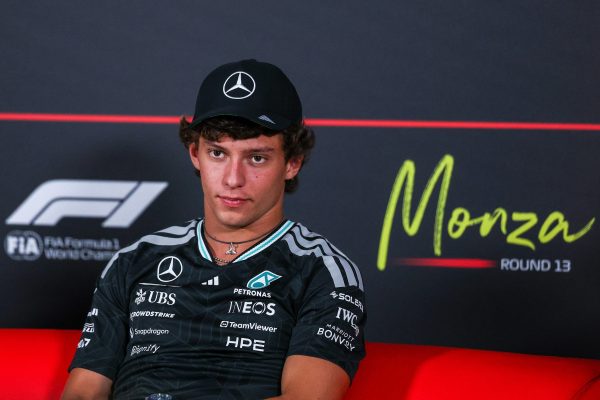
Kimi Antonelli’s achievement makes that pressure tangible. At 20, he has become Formula One’s youngest-ever World Champion. His journey to that title offers a remarkable insight into the pressures placed on a young individual in elite sport. Stepping into a seat vacated by a seven-time World Champion was already an extraordinary milestone.
To now have reached the pinnacle of the sport makes the story even more compelling.
But perhaps the more interesting story is not simply how an individual gets there.
It is what happens around a young person when an organisation places so much of its ambition in their hands.
Who carries the responsibility for that person’s performance?
And, just as importantly, who carries the responsibility for the person?
A remarkable investment in one individual
Mercedes did not discover Antonelli when he arrived in Formula One.
The team brought him into its Junior Programme in April 2019, when he was just 12 years old. It supported his progression through the junior categories, eventually making the bold decision to promote him to its senior team for 2025, replacing Lewis Hamilton.
This was no ordinary promotion.
Hamilton had won six of his seven World Drivers’ Championships with Mercedes.
The expectations attached to the seat were immense.
Mercedes was not simply giving a talented young driver an opportunity; it was making a significant investment in an individual it believed could shape the team’s future.
And the team itself has a formidable history. Between 2014 and 2021, Mercedes won eight consecutive Constructors’ Championships, alongside seven consecutive Drivers’ Championships between 2014 and 2020. It knows what sustained high performance requires, and it understands that winning is rarely the work of one person alone.
Yet placing a young driver into that environment creates a particular responsibility.
The team has the experience, the infrastructure, the resources, and the institutional knowledge.
The driver has extraordinary talent, but is still developing as a person and as a professional.
That difference matters.
More than a driver and a team
One of the more revealing aspects of the Mercedes approach has been the emphasis on development, patience, and the environment around the driver.
Toto Wolff has spoken about the importance of allowing young drivers to make mistakes, continuing to mentor them, and resisting the temptation to judge development by individual races.
His message has been consistent: “This is a long game.”
It is a deceptively simple message.
In an environment where every weekend is measured, analysed, and publicly judged, it takes discipline to look beyond the immediate result.
Wolff has also highlighted the role of key team members, such as race engineer Pete “Bono” Bonnington, who previously worked alongside Michael Schumacher and Lewis Hamilton.
Bringing experience from different eras of success, figures like Bonnington provide critical grounding.
Wolff has described him as both a “good mentor” and a “strong boss”.
These relationships matter because performance is not created in isolation.
A driver may be the person behind the wheel, but the quality of the people around them influences how they learn, recover, make decisions, and respond under scrutiny.
Technical preparation and physical conditioning are essential, but they are not the whole picture.
The ability to manage expectations, deal with setbacks, maintain perspective, and remain confident is just as crucial to sustained performance.
Antonelli himself has acknowledged that Mercedes’ support extends beyond the track, describing the team as a second family that has helped him through difficult moments and supported him as a person.
When the pressure becomes personal
Reflecting on the challenges of stepping into elite competition, Antonelli has openly discussed the mental weight of high expectations during difficult stretches.
He explained that during a difficult period in his rookie season, he felt he was letting down the people who had believed in him – particularly Toto Wolff, who had made the decision to promote him.
“I let the pressure kind of destroy me,” he candidly admitted.
He described how a meeting with the team after that difficult period helped him reset.
He began to understand how his mind and body responded to pressure, what helped him regain focus, and how to manage the intense demands of a race weekend.
There is something significant in that account.
The pressure was not simply about wanting to win.
It was about the responsibility he felt towards the people who had put their faith in him.
When others invest in your potential, their belief can become a powerful source of motivation.
But it can also become a debt you feel you must constantly repay.
This is where the relationship between individual performance and collective responsibility becomes critical: The performance belongs to the individual, but the conditions that make that performance possible are a collective responsibility.
When the individual carries the institution
We have seen similar dynamics across elite sport.
Simone Biles’ decision to step back from several events at the Tokyo Olympics challenged the long-held assumption that an elite competitor must always push forward, regardless of personal cost.
Naomi Osaka’s withdrawal from the French Open raised difficult questions about the balance between an athlete’s wellbeing and institutional obligations.
Similarly, Michael Phelps, the most decorated Olympian in history, reflected on his time in treatment by saying:
“For a long time, I saw myself as the athlete that I was, but not as a human being.”
When performance becomes inseparable from identity, it becomes difficult to separate the person from the role everyone expects them to fulfil.
Supporting someone does not mean removing pressure, lowering expectations, or avoiding difficult conversations.
It means recognising that the person carrying the performance is also a human being with limits, choices, and a life beyond the result.
Sometimes, the most supportive action an organisation can take is to create space for recovery and perspective.
When ambition becomes a shared responsibility
This dynamic is particularly relevant to founders and business leaders.
Most enterprises begin with an individual’s ambition.
Someone sees an opportunity, wants to solve a problem, or builds something from scratch.
In sport, ambition is often aligned early: a young driver wants to win championships, and the team wants to win titles.
In business, a founder builds a team to realise a vision.
But sharing an ambition does not mean sharing the same experience of pursuing it.
The organisation operates with targets, resources, and organisational objectives.
The individual has one career, one life, and a finite window of time.
Over time, misalignment can creep in.
The founder who wanted to build a sustainable, independent business finds themselves leading an organisation pressured to pursue aggressive, high-risk growth.
The leader who sought creative freedom becomes consumed by shareholder returns, expansion targets, and administrative burden.
This leads to a fundamental question: At what point does a leader stop pursuing the ambition that brought them into the business and start carrying the ambition that everyone else has attached to it?
The question is not whether the individual should want the same things as the organisation.
It is whether they retain the freedom, support, and perspective to decide what those ambitions mean for them – and what they are prepared to give in pursuit of them.
After all, it is their life too.
The performance behind the performance
Extraordinary performance is rarely the product of isolated talent or sheer willpower alone.
While individual drive and resilience are essential, equal attention must be paid to the environment that makes sustained achievement possible.
What does support look like beyond technical tools, KPIs, and immediate operational demands?
Who helps the leader maintain perspective when expectations become overwhelming?
Does the organisation create enough space for individuals to make clear-eyed decisions about their own roles?
The founder, CEO, or key operator may be the person expected to deliver the result.
But they should not be expected to carry the sole responsibility for making it possible.
Sometimes the person in the pressure seat needs someone outside the immediate demands of performance – someone with whom they can think clearly, challenge their own assumptions, and consider what they want, not just what everyone else expects.
The performance may be individual.
The responsibility for creating the conditions around it is not.
So perhaps the ultimate question for every founder and executive is this:
Have you built an organisation that depends entirely on your ability to carry everything?
Or one that takes enough collective responsibility to ensure that neither you nor the people around you have to?
Further reading
- The Danger of One More Cycle: Why Successful Founders Stay Too Long and Destroy Their Value – on founder identity, ambition and knowing when to move on.
- How to Step Out of Daily Operations & Scale the CEO – on building an organisation that does not depend on one person.