
How to Lead When You See What Others Don’t
There is something strangely uncomfortable about watching a film fail.
Not just because somebody has lost a lot of money.
But because sometimes you can see the amount of conviction, time, talent and belief that went into making something – and then, almost immediately, the market says: No thanks.
That is where we are with Digger.
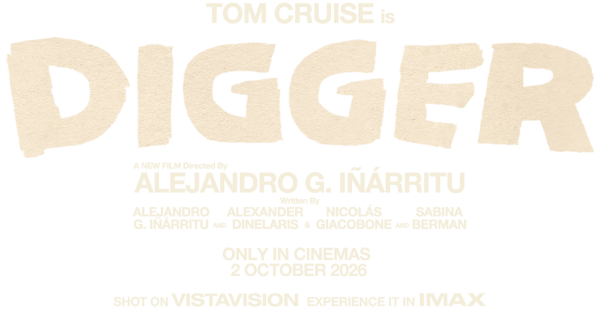
Tom Cruise and Alejandro González Iñárritu’s new film opened to around $8 million in North America and another $12 million internationally.
About $20 million worldwide.
The reported production budget is somewhere between $125 million and $180 million, depending on which industry estimate you believe, with $125 million being the figure reported by the the LA Times and higher estimates circulating in the trade press.
Add an estimated $100 million global marketing campaign and the numbers become fairly extraordinary.
Whatever the final accounting looks like, this is clearly going to be a very expensive theatrical disappointment.
The numbers are brutal.
And yet I find myself thinking less about the failure of Digger than about the strange thing that happens when you spend years believing in something that almost nobody else can see.
Because that happens outside Hollywood all the time.
And sometimes the person who looks slightly mad is simply early.
Sometimes they are wrong.
And sometimes they are right
The difficult part is that, while you are living through it, you generally don’t know which one you are.
(For what it’s worth, I loved the film.)
Ten years is a long time to believe in an idea
Alejandro González Iñárritu is not exactly some unknown filmmaker trying to get his first movie made.
He directed Birdman.
He directed The Revenant.
He won consecutive Oscars for directing.
And yet Digger was still a remarkably long journey.
Iñárritu has said he had been thinking about the character and the idea for around a decade.
He described the process not simply as writing a script, but as searching for the right way to tell the story.
The project was something he had been carrying for years before it finally became a film.
That sentence interests me.
Not “I had the idea.”
Not “I wrote the script.”
I was looking for the right way to say it.
There is a difference.
The story evolved.
The practical realities changed.
At some point the film had to move from something living in a director’s imagination to something that could actually be made.
That is often the unglamorous part of a vision.
You can see something clearly in your head.
Getting the rest of the world to see it – and getting the money, people, technology, timing and circumstances to line up around it – is another matter entirely.
And then there was Tom Cruise.
Cruise and Iñárritu had apparently wanted to work together for years.
Cruise had been a fan of Iñárritu since seeing Amores Perros, and eventually became involved in Digger as both star and producer.
Cruise says Iñárritu brought the project to him around seven years ago.
Iñárritu spent several days reading the script aloud to Cruise so that Cruise could understand what was in the director’s mind before deciding how he could contribute.
That’s quite a commitment.
Nearly a decade from idea to finished film.
Seven years from the project reaching Cruise to opening night.
And then the audience has roughly two hours to decide whether it was worth it.
Apparently, for a lot of them, it wasn’t.
But here’s the thing.
That doesn’t necessarily tell us whether the original conviction was foolish.
Nor does my enjoyment of the film prove that it was right.
It just makes the question more interesting.
The strange cruelty of the scoreboard
There is something very final about a box-office number.
$20 million.
It doesn’t tell you whether the cinematography was extraordinary.
It doesn’t tell you whether the actors took risks.
It doesn’t tell you whether the director was trying something nobody else had tried.
It certainly doesn’t tell you whether the idea behind the film was worth exploring.
It tells you how many people bought tickets.
And that matters.
A film costing hundreds of millions of dollars cannot survive indefinitely on the argument that it is artistically brave.
At some point somebody has to pay the bill.
That is important because there is a temptation, whenever something ambitious fails, to immediately turn the failure into a story about being misunderstood.
I’m not sure that is useful.
Perhaps Digger is simply a bad film.
Perhaps it is an interesting film that doesn’t work or
Perhaps it is a good film that arrived at the wrong moment.
Perhaps it is trying to say something audiences don’t want to hear.
Perhaps it is all of those things.
We don’t know yet.
The audience has given its answer, at least for now.
But there is another question worth asking.
What happens when the crowd is wrong?
Because history is full of uncomfortable examples.
The problem with being early
Alfred Wegener proposed continental drift in the early twentieth century.
The idea was controversial because it challenged one of the fundamental assumptions of geology.
The continents, he argued, had moved.
He was ridiculed.
The geological establishment was largely hostile to him.
Eventually, as more evidence accumulated, continental drift became part of the foundation of modern plate tectonics.
Ignaz Semmelweis noticed something that now seems almost embarrassingly obvious.
Doctors who moved from autopsies to maternity wards without properly cleansing their hands were contributing to the deaths of women.
He introduced handwashing procedures and saw maternal mortality fall dramatically.
His colleagues did not embrace the idea.
He was met with hostility and exclusion.
The science eventually caught up with the observation.
Then there is business.
In 1975, Kodak engineer Steve Sasson built one of the world’s first portable digital cameras.
It was terrible by today’s standards.
The images were tiny and crude.
It took around 23 seconds to record a single image.
There wasn’t an obvious consumer market.
Kodak patented the technology but did not put the prototype into production.
This story is often told too neatly – “Kodak invented digital photography and ignored it” – because the real story is more complicated.
The technology wasn’t ready.
The market wasn’t ready.
And Kodak had an enormous existing business built around film.
The prototype was, in some respects, simply too early.
Sasson’s invention was technically important, but the surrounding ecosystem needed another couple of decades to catch up.
But that is precisely the interesting part.
The problem with new ideas is rarely simply that people are stupid.
Sometimes the new thing genuinely looks inferior or the old thing genuinely works better.
Sometimes the economics don’t make sense yet or the person with the vision is seeing ten years into the future while everybody else is correctly looking at today.
And sometimes the person with the vision is simply wrong.
That is the bit we don’t like.
Because hindsight makes being early look much easier than it actually was.
Being right too early can look almost identical to being completely wrong
Cinema is full of things that arrived too soon
The movie business gives us some wonderful examples.
The Shawshank Redemption was not a commercial success when it opened in 1994.
It made roughly $16 million during its original US theatrical run against a $25 million production budget.
Today it is routinely regarded as one of the great films.
Its audience found it slowly – through word of mouth, home video and television.
Blade Runner initially struggled commercially.
The Big Lebowski wasn’t the phenomenon it later became.
It’s a Wonderful Life – one of the most culturally familiar films ever made – was also initially unsuccessful and failed to recoup its production cost.
Its reputation grew dramatically later, particularly through television.
But here is where I think we should be careful.
These stories are seductive.
Because we love the narrative of the misunderstood genius.
The person everyone laughed at.
The lone voice who knew the truth.
The entrepreneur who refused to listen.
The artist who kept going.
And eventually:
They were right.
It makes a wonderful story.
It can also be terrible advice.
Because for every Wegener there are thousands of people who were convinced they had discovered the future and were simply wrong.
For every Kodak engineer with an idea ahead of the market, there are countless inventions that never deserved to become businesses.
For every Shawshank, there are hundreds of films that flopped because they weren’t very good.
So perhaps the real question isn’t:
“Do I believe in myself enough?”
Perhaps it is:
“How do I know when my conviction deserves more time?”
That is much harder.
Being right is not enough
This is where I think Digger gets particularly interesting.
Because the character at the centre of the film is a man who believes in his own ability to control reality.
He creates the problem and then believes he can become the person who saves everyone from it.
That sounds like satire.
But it also sounds remarkably familiar.
How many entrepreneurs have I met who are convinced they can solve everything themselves?
How many leaders become so attached to their own interpretation of reality that contradictory evidence becomes something to explain away?
How many of us have had an idea that didn’t work and immediately decided that the market “wasn’t ready”?
There is a dangerous line between conviction and self-deception.
And perhaps the best test is not whether you believe strongly.
It is whether you are still willing to be challenged.
Wegener was not proved right simply because he refused to listen.
Semmelweis didn’t change medicine merely because he had confidence.
Steve Sasson’s camera didn’t become important because he believed it would.
The evidence eventually mattered.
That’s an important distinction.
Being early requires conviction.
Being right requires evidence.
You need both.
So what do we do when nobody else sees it?
This is where it becomes personal.
Because most meaningful decisions in our lives don’t arrive with certainty.
You might want to leave the business you built.
Take on a completely different role.
Invest money into something that nobody around you understands.
Change your strategy.
Hire someone senior enough to challenge you.
Stop doing something that has made you successful because you sense it is no longer the future.
Start something that looks slightly ridiculous today.
And suddenly you are standing in that uncomfortable place.
The place where your internal voice says one thing and the external evidence says another.
What do you do?
I don’t think the answer is simply “believe in yourself.”
That phrase has become almost meaningless.
Sometimes you should believe in yourself.
Sometimes you should listen to everyone else.
The difficult skill is knowing which moment you are in.
Perhaps that is why good advisers, mentors, coaches and friends matter.
Not because they have the answer.
Because they can sometimes see what you cannot.
When you are emotionally attached to an idea, you need someone who can ask:
What evidence would convince you that you’re wrong?
What evidence would convince you that you’re right?
Are you protecting the idea – or your ego?
Are you genuinely early?
Or are you simply unwilling to change?
And perhaps the most uncomfortable question:
If nobody agreed with me, would I still believe this for the right reasons?
That is very different from surrounding yourself with people who tell you that you are brilliant.
Sometimes courage comes from belief in yourself.
Sometimes courage comes from somebody else saying:
“I can see what you are seeing. Let’s examine it properly.”
And sometimes courage is hearing:
“I don’t think you’re right.”
And being strong enough to listen.
The lone wolf needs a pack
I like the idea of the black sheep.
The person who doesn’t quite fit.
The entrepreneur who sees something differently.
The leader who keeps asking questions everyone else has stopped asking.
The person who has a strange idea and cannot quite let it go.
We need those people.
But I have become increasingly suspicious of the “lone wolf” mythology.
Very few great things are actually built alone.
Iñárritu needed Cruise.
Cruise needed Iñárritu.
Wegener needed generations of scientists to test and extend the idea.
Semmelweis needed later science to explain what he had observed.
Sasson’s invention needed an entire technological ecosystem that did not yet exist.
Even Shawshank needed an audience eventually willing to tell someone else:
“You should watch this.”
Perhaps that is the lesson.
If you are ahead of the room, you probably need the room.
You need people who will challenge the idea without killing it.
People who can distinguish between “this is uncomfortable because it is new” and “this is uncomfortable because it is wrong.”
That is a very different kind of support.
Not applause.
Not permission.
Perspective.
And perhaps that is what courage actually looks like.
Not standing alone shouting that everyone else is wrong.
But being willing to stand slightly apart from the crowd while still listening carefully to what the crowd is telling you.
So, was Digger wrong?
Maybe.
Maybe it will eventually be one of those films people rediscover and say, “They just weren’t
ready for it.”
Or perhaps it won’t.
Maybe the market got it exactly right.
Maybe Iñárritu spent nearly a decade searching for the right way to say something that simply didn’t connect.
We don’t know yet.
And that uncertainty is precisely what makes the story interesting.
Because most of us don’t get to know either
When we make the big decision, there is no future Wikipedia page telling us whether we were visionary or foolish.
There is only the information we have today.
The people we trust.
The questions we are willing to ask.
And that uncomfortable little voice in our head saying:
“I think this is right.”
Maybe the real skill is not learning to silence that voice.
Maybe it is learning how to test it.
Because sometimes the crowd is right.
Sometimes you are.
And sometimes you are simply five years too early.
The hardest part is having the courage to find out.
And perhaps that’s the strange thing about Digger.
A film can be a commercial failure and still mean something deeply to the person who made it – or to the person sitting in the audience.
I loved it.
That doesn’t make the box-office numbers wrong.
And the box-office numbers don’t make my experience of the film wrong either.
Perhaps real conviction lives somewhere in that uncomfortable space between the two.
And maybe that’s where most of the important decisions in our lives live too.
So where in your own life are you unsure whether you are being stubborn or simply early?
And who do you trust enough to help you tell the difference?